



Solar Sharer Offer 2026: Get 3 Hours of Free Electricity
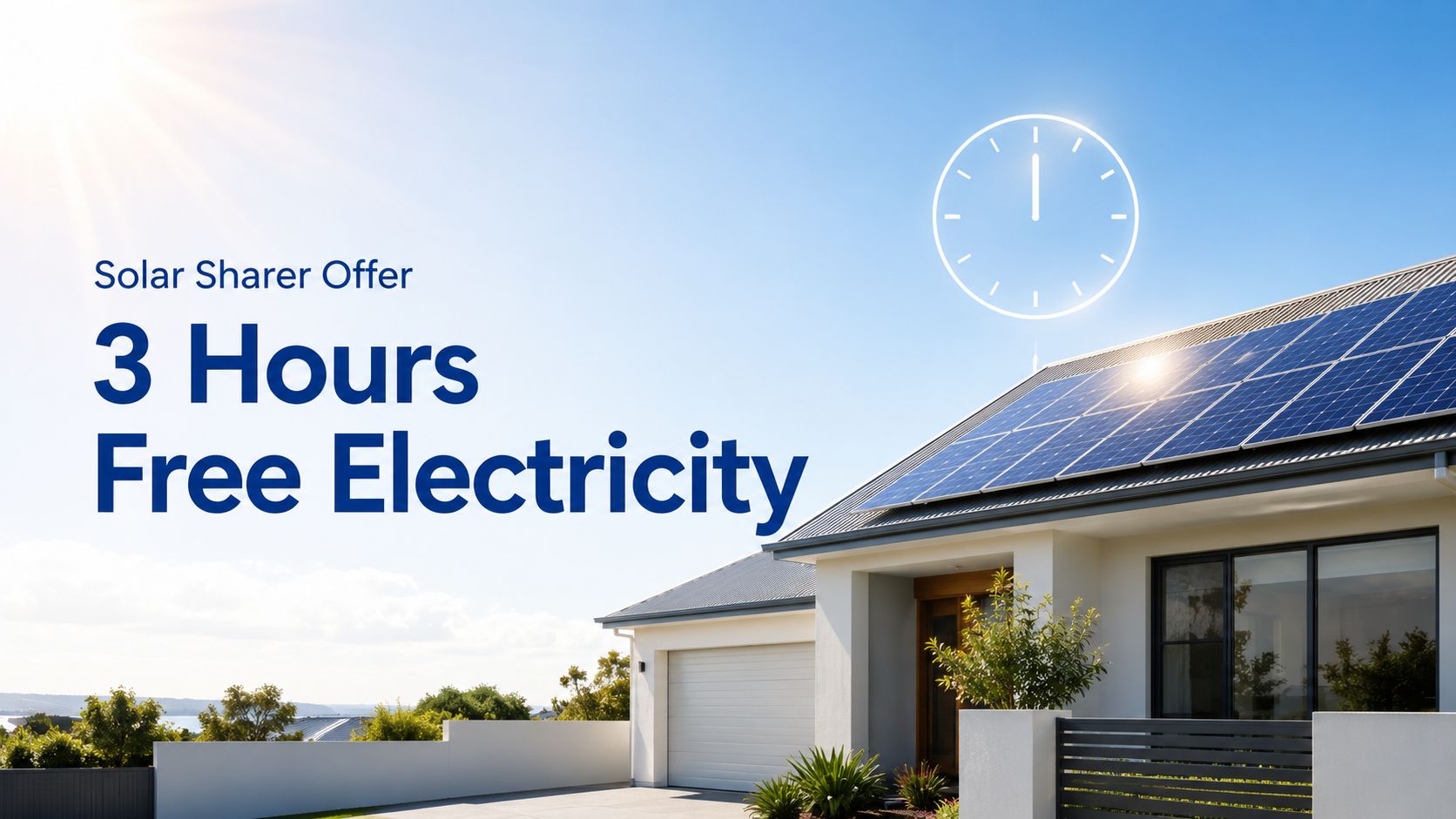
From 1 July 2026, eligible Australian households can access a new regulated electricity plan offering three hours of free electricity every day.
Known as the Solar Sharer Offer, the plan is designed to encourage households to use more electricity during the middle of the day, when Australia’s solar energy generation is typically high.
For households that can schedule appliances, charge an electric vehicle or shift other energy-intensive activities into the free period, the offer may provide a valuable new way to manage electricity costs.
However, the Solar Sharer Offer is not automatically the cheapest option for every home. Electricity rates outside the free window may be higher, daily supply charges still apply, and customers must actively opt into the plan.
Here is everything you need to know before deciding whether the Solar Sharer Offer is right for your household.
What Is the Solar Sharer Offer?
The Solar Sharer Offer, or SSO, is a regulated electricity standing offer that includes a fixed three-hour period during which eligible customers can use electricity free of usage charges.
During this daily free period:
-
The first 24 kilowatt-hours of electricity used are free.
-
Electricity used above 24 kWh is charged at a specified reasonable-use rate.
-
The daily supply charge may still apply.
-
Appliances connected to a controlled-load circuit are charged separately and do not receive free electricity under the offer.
Outside the free period, electricity is charged using time-of-use rates, which may include peak, shoulder, off-peak or solar-soak rates.
The Solar Sharer Offer is an opt-in plan. Your electricity retailer will not automatically move you onto it, even when you are eligible.
When Are the Three Free Hours of Electricity?
The free electricity window occurs at the same time every day throughout the year.
New South Wales and South East Queensland
Eligible households receive free electricity between:
11:00 am and 2:00 pm
South Australia
Eligible households receive free electricity between:
12:00 pm and 3:00 pm
These periods remain fixed during daylight saving, making it easier for households to schedule appliances and recurring energy use.
For NSW households, this means appliances can be programmed to operate between 11 am and 2 pm every day without incurring normal electricity usage charges, up to the 24 kWh daily limit.
Who Is Eligible for the Solar Sharer Offer?
To access the Solar Sharer Offer, you must meet all the following eligibility requirements:
-
You must be a residential electricity customer.
-
Your property must have a smart meter, also known as an interval meter.
-
You must live in New South Wales, South Australia or South East Queensland.
-
Your electricity supply must not be provided through an embedded network.
-
You must be with an electricity retailer that provides the Solar Sharer Offer.
Electricity retailers with more than 1,000 customers across Default Market Offer regions are generally required to make the plan available to eligible customers. Some very small retailers may be exempt.
You do not need rooftop solar panels to qualify. Despite its name, the offer is intended to help households take advantage of abundant daytime renewable energy regardless of whether they have their own solar system.
How Much Free Electricity Can You Use?
Solar Sharer Offer customers can use up to 24 kWh of electricity free of usage charges during the three-hour period each day.
According to Energy Made Easy, 24 kWh is approximately the amount of electricity an average five-person household uses over an entire day. For most homes, this provides a substantial amount of usable energy within the free window.
When usage exceeds 24 kWh during the free period, additional electricity is charged at the plan’s reasonable-use rate. This rate must equal the cheapest usage rate applied at another time of day under that plan.
Remember that “free electricity” refers to eligible usage charges. You may still pay:
-
Your retailer’s fixed daily supply charge
-
Controlled-load electricity charges
-
Usage charges outside the three-hour period
-
Charges for electricity used beyond the 24 kWh daily allowance
What Can You Run During the Free Electricity Period?
The Solar Sharer Offer may be particularly useful for households that can shift high-energy activities into the middle of the day.
Examples include:
Charge an Electric Vehicle
Electric vehicles can consume a significant amount of electricity. Charging at home during the free period could allow eligible households to move part of their EV charging into a zero-usage-cost window.
The amount that can be charged within three hours will depend on the vehicle, charger capacity, household electricity demand and connection limitations.
Run Your Washing Machine and Dryer
Scheduling washing and drying between 11 am and 2 pm in NSW or South East Queensland could move these appliances away from more expensive morning and evening periods.
Use Your Dishwasher
Many modern dishwashers include delay-start settings. This makes it easier to schedule a cleaning cycle during the free period, even when no one is home.
Heat or Cool Your Home
Households may be able to pre-cool or pre-heat their homes during the free window, reducing the amount of heating or cooling required later in the day.
Run Pool Pumps and Other Equipment
Pool pumps and other programmable household equipment may also be scheduled during the free period, provided they are not connected to a separately billed controlled-load circuit.
The offer is likely to provide the greatest value when several flexible appliances can be scheduled automatically rather than relying on household members to manually turn them on every day.
Do You Need Solar Panels to Access the Offer?
No. Rooftop solar is not an eligibility requirement for the Solar Sharer Offer.
The purpose of the plan is to encourage greater electricity use during periods when large amounts of solar energy are entering the grid. This means households without solar panels can still participate, provided they meet the other eligibility conditions.
However, households that already have solar panels should evaluate the plan carefully.
The free window occurs during the middle of the day, which may overlap with the period when a rooftop solar system is already supplying much of the home’s electricity. As a result, solar households should compare the value of the free period against:
-
Their existing solar self-consumption
-
Solar feed-in tariffs
-
Peak and evening electricity rates
-
Daily supply charges
-
Battery charging and discharging patterns
-
Their ability to move additional consumption into the free window
The Solar Sharer Offer should therefore be assessed as part of the household’s complete energy profile—not as a standalone promise of automatic savings.
How Could a Home Battery Complement Your Energy Strategy?
The Solar Sharer Offer and a home battery perform different roles.
The electricity plan provides a free daytime usage window, while a battery can help a household store energy and reduce dependence on the grid during other parts of the day.
A professionally designed solar and battery system may help eligible households:
-
Store excess rooftop solar generation
-
Reduce grid electricity consumption during expensive evening periods
-
Increase solar self-consumption
-
Manage energy use more strategically
-
Improve household energy resilience when backup capability is included
Battery operation must be configured around the household’s electricity plan, solar production, consumption patterns and retailer conditions.
Before changing plans or battery settings, homeowners should review their smart-meter data and obtain advice based on their actual usage.
Will the Solar Sharer Offer Reduce Your Electricity Bill?
It may—but the offer will not suit every household.
The plan may be worth considering when:
-
Someone is regularly home during the day.
-
You use substantial electricity between the available free hours.
-
Your appliances have timers or smart scheduling features.
-
You can move EV charging, washing, cooling or other major loads into the free period.
-
You are comfortable reducing electricity use during more expensive peak periods.
The plan may be less suitable when:
-
Most of your electricity is used in the morning or evening.
-
Your schedule prevents you from shifting appliance use.
-
Your highest-consumption appliances are connected to controlled loads.
-
The plan’s peak, shoulder or supply charges are higher than your existing rates.
-
Your existing solar system already supplies most of your midday electricity needs.
Energy Made Easy specifically advises consumers to compare the entire electricity plan rather than focusing only on the free-power headline. Actual savings depend on when and how much electricity a household uses.
What Should You Compare Before Switching?
Before choosing a Solar Sharer Offer plan, check the following details.
1. Rates Outside the Free Period
Review the peak, shoulder, off-peak and solar-soak rates carefully. Higher prices outside the free period could offset the benefit of free daytime electricity.
2. Daily Supply Charge
The fixed daily supply charge continues to apply under the Solar Sharer Offer.
3. Your Actual Electricity-Usage Pattern
Smart-meter data can show when your home uses the most electricity. Using actual data is more reliable than estimating how much consumption you believe you can shift.
4. Controlled-Load Charges
Controlled-load appliances are billed separately and are not covered by the free period. Depending on the property, this could include electric hot-water systems, pool pumps or other dedicated loads.
5. Solar Feed-In Tariffs
Solar households should check whether moving to a new electricity plan changes their feed-in tariff or other solar-related terms.
6. Retailer Conditions
Although Solar Sharer Offers are regulated, plans from different retailers may have different rates and conditions. Compare available offers before making a decision.
How to Get the Solar Sharer Offer
The Solar Sharer Offer is not applied automatically.
To access it:
-
Confirm that your property has a compatible smart meter.
-
Check that you live in NSW, South Australia or South East Queensland.
-
Confirm that you are not supplied through an embedded network.
-
Compare available Solar Sharer plans using Energy Made Easy.
-
Contact your preferred electricity retailer.
-
Ask the retailer to move you onto its Solar Sharer Offer.
Review the complete tariff information before agreeing to switch.
Prepare Your Home for Smarter Energy Use
The Solar Sharer Offer creates a new opportunity for eligible households to rethink when they use electricity.
Getting the best outcome may require more than changing electricity plans. Appliance scheduling, smart controls, rooftop solar, EV charging and battery storage can all influence how effectively a home manages daytime and evening energy use.
Electrifying Australia can assess your current energy usage and help you explore a properly designed solar, battery or integrated home-energy solution.
Whether you are considering a new solar system, adding a battery to an existing installation or preparing your home for smarter energy management, our team can help you understand the available options.
Request a free home-energy assessment from Electrifying Australia today.
Subscribe to get special offers & updates.
Go To Top
142 Gipps Road, Smithfield, Sydney, 2164
1800 788 638
info@electrifyingaustralia.com.au


Electrifying Australia acknowledges Aboriginal and Torres Strait Islander peoples as the Traditional Custodians of the land on which we operate. We pay our respects to Aboriginal and Torres Strait Islander Elders past, present, and emerging.